Google and Meta Ads
Google Ads or Meta Ads: Choose Around Demand and Your Offer
There is no universal winner between Google Ads and Meta Ads. Here are four questions to choose based on the demand that already exists and what you sell.
"Should I advertise on Google or on Facebook and Instagram?" It's a common question, and the honest answer starts with: it depends on what your customers do before they contact you. Neither channel wins every time.
This article offers a way to choose. First, look at whether demand already exists (people are searching for what you sell) or has to be awakened (they don't yet know they need it). Then compare creative, where the click lands, and tracking. We promise no results: everything depends on your offer, your region and your competition.
First Question: Are People Already Looking for Your Offer?
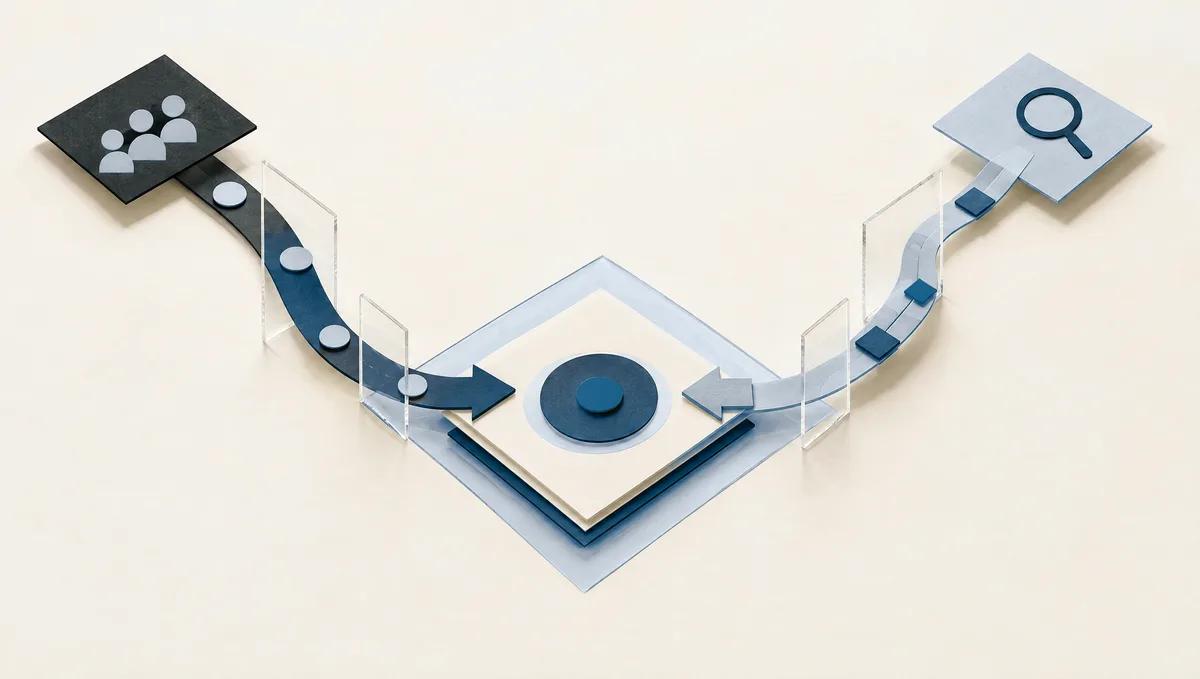
This is the central distinction. In Google Ads, Search campaigns show text ads in search results to reach people who are already searching for the products or services you offer. The ad answers a query the person has just typed.
Discovery campaigns work differently. At Google, Demand Gen serves visual ads across YouTube, Discover, Gmail and the Google Display Network. At Meta, the advertiser picks an objective (traffic, leads, sales, awareness, among others), and the platform then looks for people likely to take the matching action. In both cases, the person hasn't searched for anything: the ad shows up in a feed, a video or an inbox.
A rule of thumb, which is AETHER's judgment rather than a law: if your offer answers a need people type into a search engine (an emergency repair, an urgent service, a known product), search is a good place to start. If your offer is new, visual or little known, discovery can reach people search will never see, but it often takes more patience.
The Comparison Table
The Comparison Table
| Criterion | Search intent (Google Search) | Discovery (Meta, Demand Gen) |
|---|---|---|
| Moment | The person is searching now | The person is browsing a feed or a video |
| Targeting starting point | The words and phrases searched | The chosen objective, audiences, creative |
| Creative | Short text that answers the query | Images, video, varied visual formats |
| Destination | A page that answers the search | A page, built-in form, conversation or call depending on the objective |
| Tracking | Conversion tracking you define | Tracking by objective and site events |
| Common risk | Demand too small or too competitive | Attention captured without a concrete action |
This table describes how each approach tends to work, not how it performs. The same business can use both, often at different times.
Creative: Text That Answers or an Image That Holds Attention
In search, the ad is mostly text. It works best when it reuses the vocabulary of the query and promises only what the page delivers.
In discovery, the visual carries the message. Meta offers several ad formats: photo, video, stories, carousel (up to ten images or videos) and collection. That assumes you have, or can produce, good visual material. If your business has no usable photos or video, plan for it as a cost line, as our Google Ads budget article explains, where creative is one of four costs to separate.
Destination: Where Should the Click Land?
An ad is only as good as what follows it. With a search ad, the page must answer the question right away. With a discovery ad, the page must explain first, because the person wasn't looking for your offer.
Meta also offers destinations that don't go through your website. The Traffic objective can send people to a website or app, a WhatsApp or Messenger conversation, or a phone call. The Leads objective relies on forms completed directly inside Meta's platforms. That's convenient, but the follow-up has to be planned: who replies, how quickly and in which tool?
Either way, a slow or confusing page, or one without a clear action, undoes the ad's work. Our web design service exists for this reason.
Tracking: Knowing What You Got
Without tracking, you compare clicks, not enquiries. At Google, conversion tracking measures the actions you consider valuable, such as a purchase, a sign-up or a phone call, and helps show which campaigns and keywords lead to them. At Meta, the pixel shares actions taken on your website, such as page views or leads, so they can be used in campaigns.
Two different tools give two reports that won't necessarily match. So decide in advance which action counts (a quote request received, for example) and how to verify it end to end. The roles of GA4 and Google Tag Manager in that chain are explained in GA4 and Google Tag Manager: different roles, and our analytics and tracking service covers the setup.
How to Decide Without a Universal Winner
Four questions are enough for a first choice:
- Does demand exist? Are people already typing what you sell? If so, search deserves a test.
- Do you have visuals? Without material, discovery costs more to start.
- Where does the click land, and who replies next? A clear page, a reliable form and quick follow-up matter more than the channel.
- Which action will you track? If you can't measure it, don't launch yet.
A limited-budget test, with a single action to track and an agreed observation period, often teaches more than a long debate about channels. We can't predict which channel will return more for your business.
FAQ
Should I run Google Ads and Meta Ads at the same time?
Not necessarily. One well-tracked channel beats two poorly measured ones. Add the second once the first is in place and you know how to read its results.
Is Meta Ads a fit for a local service business?
It can be, especially if your offer shows well in images or video, or if a conversation (message, call) works as a first step. Nothing guarantees it: test with one clear action to track.
Is one channel always cheaper than the other?
No. Cost depends on your industry, competition and the quality of what follows the click (page, tracking). Be wary of any claim about a universal cost.
Next Step
Unsure between the two channels, or want a second look at a proposal you received? A first conversation can clarify the demand, the visuals you have, the destination and the action to track. See our Google and Meta Ads service or let's talk about your project.